Medication Management Tips for Seniors
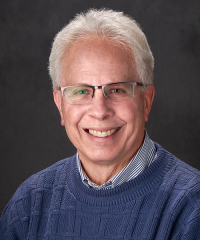
Our guest discusses a wide range of pharmacological topics of interest to the aging adult and caregivers, from medication reconciliation to sleep aids to addressing how some drugs affect memory and thinking skills.
Guest: Robert Breslow, pharmacist, associate professor at the University of Wisconsin School of Pharmacy
Subscribe to this podcast through iTunes, Spotify, Podbean, Stitcher, or Google Play Music.
Transcript
Introduction: I’m Dr Nathaniel Chin and you’re listening to Dementia Matters, a podcast about Alzheimer’s disease. Dementia Matters is a production of the Wisconsin Alzheimer’s Disease Research Center. Our goal is to educate listeners on the latest news and Alzheimer’s disease research and caregiver strategies. Thanks for joining us.
Dr. Nathaniel Chin: My guest today is Robert Breslow, an associate professor at the UW–Madison School of Pharmacy. As a component of his faculty appointment, he practices as a clinical pharmacist in a UW Health Geriatrics Clinic. One of Mr. Breslow’s research projects assessed the feasibility of pharmacists conducting memory screening in community pharmacies. Among other geriatric related activities and projects, he was a consultant for the Centers for Disease Control to help develop an educational program to train pharmacists to identify and manage false risk in older adults. Bob, welcome to Dementia Matters.
Dr. Robert Breslow: Well thanks for inviting me.
Chin: To begin, with dementia, Alzheimer’s disease, mild cognitive impairment, they aren’t always a clear diagnosis and determining why someone’s memory or thinking skills are declining is even more difficult. As a geriatrician, when one of my patients comes to me with memory concerns I start with a review of their chronic conditions and the medications they are taking to treat them. In your experience, how many medications is the average American in their 70s taking?
Breslow: Well that’s a great question. Some of it depends on the living environment for the patient. The individual or adult who’s living at home might take, on average, five medications in their 70s and that grows as we age because of burden of disease, we have more problems that are chronic and that often leads to more medication. Contrast that to someone, an older adult who’s living in a skilled nursing facility, they’re there because of frailty and difficulty managing on their own at home and need extra care and often there are many more medications than the average of five that a 70 year old American might be taking.
Chin: And I must say, Bob, as a clinician, five feels low to me and I think that’s reflective of people who frequently need to go to their health care provider are more likely to be on medications.
Breslow: That may be true, certainly more medication if you use that as a – we call a surrogate or proxy for disease or burden of disease, then you might expect that. But if we think about the definition of what is commonly referred to as polypharmacy, often research and the way we conventionally think about it is five or more medications. So that kind of hits that average of that 70 year old adult with an average number of medical problems, if you will, on an average number of medications.
Chin: When you give that number, are you including over-the-counter and supplements that people might be taking?
Breslow: Usually not and that’s because that’s very difficult to track. Commonly these estimates of prescription drug use come from very large databases. This could be from your insurance company or the federal government by doing surveys and they will have a number that they can come up with by looking at that age group and then trying to determine how many prescriptions. OTCs, over-the-counter medicines, it’s a red herring as I like to say because we just don’t know what individuals are using unless you’re able to interview thousands of Americans to find out really what they are taking and then look at the numbers and average that.
Chin: Okay well, how common is it that a medication or multiple medications are negatively affecting a person’s memory or thinking ability?
Breslow: Well it depends on how you want to look at it but medications in general it’s thought that anywhere from 10 to 20 percent, maybe more, of individuals with cognitive impairment is due to medication taking. Now, the studies—it’s difficult to pin that down because they often have different methods that they use and the outcomes that they’re evaluating, what they call cognitive impairment, all those factors may enter into making this determination. Maybe as many as one in ten individuals with thinking problems find that there’s at least a contribution from a medication that they’re taking.
Chin: Are there certain medications that you repeatedly see as culprits—let’s call it—in negatively affecting a person’s memory or cognition?
Breslow: Again somewhat a broad question in the sense that it really—the kind of things to think about. If you’re buying over-the-counter medicines, for example, and you have allergies and you’re used to buying antihistamines to help with the runny nose and the itchy eyes, et cetera, they can cause problems with memory and cognition because they have a certain mechanism of action, we call it, that can affect the neurotransmitters in the brain that help with thinking and memory. By negatively impacting those chemicals, it can, in an unintended way, affect your memory. Medicines for overactive bladder disease is another group of medicines that are known to cause problems with memory and thinking because, again, they affect that same neurotransmitter, that same mechanism in the brain that sends messages from one nerve to another and that can impact very much. All of these medicines, as well as many others, have characteristics we call anticholinergic and there’s a very broad number of medications in classes whose pharmacology involves this anticholinergic effect, some lesser, some greater, but they all have the potential to affect memory and thinking.
Chin: Well how do you advise senior patients who are having trouble sleeping, for instance, and are looking for over-the-counter or prescription sleep aids?
Breslow: Well the bottom line is don’t take them. (laughs) The fact is that these sleep aids are, well in all cases, really are considered to be antihistamines. I’d already talked about antihistamines being problematic, affecting the process of thinking and memory and causing confusion and increasing risk for falls and a whole host of unwanted consequences. I would say to to the older adult wanting to get some help with sleep to try what we call non-pharmacologic approaches first, things that don’t require medicine. You can strategize with your health care provider to come up with some things that you can do. Now one older adult might say, “Well I’m buying melatonin over the counter because I’ve heard that it helps with sleep.” In some cases it does and it does not have necessarily the unwanted consequences that the antihistamine-like sleep aids would have but they aren’t wholly safe either. They may work for some people, they may not work for others. They really have more specific uses like in the case of traveling and having problems with changes of time zones, people who do shift work changes. It does help some individuals but I think you really need to converse with your provider on strategies that you might be able to use that would avoid the use of any kind of over-the-counter medication.
Chin: You know, I’ve been getting a lot of specific questions in clinic about restless leg syndrome because there are prescription medications for this and whether or not those are dangerous in the long term. I will often say we don’t have the data yet to know long-term what they are but again that mentality of the lowest effective dose. Does that seem fair to you?
Breslow: Absolutely, we have an adage in pharmacy and in medicine of start low and go slow. We don’t really know, with the aging changes that are occurring, how you’re going to react to a particular medicine and if it isn’t an emergency situation—a life or death situation—you have what we call a tincture of time to be able to try a small amount of drug. If it doesn’t work, it doesn’t always mean it’s the wrong drug. It may means the dose isn’t high enough, but that we don’t overshoot and cause these side effects that we don’t want to happen. Then we don’t know, had we used a lower dose, would it have been effective with a lower likelihood of side effects or maybe it isn’t going to work at all? We just don’t know. In all fairness, there could be some opportunities where we discard a drug, if you will, that doesn’t seem to be working thinking that it was a problem with the drug. That being said, I think the medications that you mentioned—the restless leg drugs—have some mechanisms in the brain that can actually cause us to get more agitated and have unusual dreams, and almost like psychotic behaviors in too high a dose. So that’s another reason that we want to always start at a slow dose, a low dose, and go up very slowly to see what is the minimum effective dose that we can get by with without causing side effects. Even with that strategy, you may not be able to tolerate the drug.
Chin: Yeah, nothing is without consequences.
Breslow: Absolutely.
Chin: Are there other over-the-counter medications people, especially seniors, need to be aware of that could cause interactions with other medications or affect their thinking?
Breslow: That’s a tough one. There are certain medications that are known to contribute to unwanted side effects. Some of them is based on interactions, but without knowing what other medications someone is on it would be really very difficult to know if there was an interacting medication. The best thing you can do for yourself, as your own advocate, is to make sure that the prescriber who’s working with you knows exactly what you’re taking and what over-the-counter medicine you might be interested in taking because you want to do some self-care or even speak to the pharmacist because they can run your profile and add in an over-the-counter medicine and find out if there might be some risks of an interaction. So always use your pharmacist as a resource. They won’t be able to necessarily prescribe medicines for you but they can tell you if you’re putting yourself at risk by thinking you’re taking a benign medicine because it’s sold over-the-counter but in actuality you may cause yourself some harm.
Chin: I think that’s a great recommendation, Bob. So, one, keep an updated list so that you are always able to share what you’re actually taking.
Breslow: Absolutely.
Chin: And then, two, you can reach out to your pharmacist who has their own way of looking at interactions and can give you recommendations.
Breslow: Right, so the subliminal message there—or the outright message—is when you keep your record of medications, that needs to be all your prescription medicines, any dietary supplements you take, all the over-the-counter medicines that you might be taking. Even if you take them infrequently, it’s good to have a complete list so that the potential hazards could be uncovered and providing you the good advice of what to avoid or concerns that you should have about using these medications with too greater frequency.
Chin: For geriatric patients, most medications aren’t curing a condition unless it’s a dose of an antibiotic to clear up an infection. Many of the medications people are taking are used to control conditions like high blood pressure, heart failure, incontinence, osteoporosis, any number of chronic conditions that older people may face. Is it okay to stop taking medications for some of these diseases in order to gain other health benefits in the process, perhaps trading longevity for quality of life?
Breslow: Well that’s a loaded question. I think we—in this era of what we call patient-centered care where the older adult the patient is part of the decision-making process and shouldn’t necessarily be in isolation from decisions of the health care providers because we each may have our own agendas of what our preferences are whether, as you mentioned, you want quality of life or you want longevity—and the ultimate would be both, that you’d have a high quality of life and also live many healthy years. We know that that isn’t always the case. So I think that, by stopping a medication that you think is causing a side effect and that’s affecting your quality of life but maybe assisting you with longer years, those are conversations you have to have with your care provider team and decide really based on your goals and what some of the risks and benefits of stopping that medication would be to you are is part of the conversation that you must have. I hear this all the time, “Well, my medicine seems to be causing me more problems than it seems to be helping me.” Many illnesses are silent, they don’t have symptoms or signs that are really obvious but the damaging effects of that disease can be happening without us ever realizing it. How we decide has to be a team approach.
Chin: I think that’s well said, Bob, and it was a difficult question. I appreciate that because really it is for the individual to consider what do they value, how do they wish for their course of disease, but it is a conversation with your health care provider who at least can give you recommendations and information that is needed.
Breslow: Absolutely.
Chin: Can you explain the importance of medication reconciliation and de-prescribing? These are two terms that we use over and over again in the geriatric world.
Breslow: Well let me start with medication reconciliation. That’s actually a process that’s intended for pharmacists or other health care providers to follow. It’s a framework for getting what we call the best medication history. That’s, as I mentioned earlier, about over-the-counters, medications and herbals and all the things that you’re taking plus your prescription medicines. That’s the intended purpose of that, but more importantly it’s also a way to make sure that there aren’t any slip-ups in medications that you should be taking during what we call transitions of care. Let’s say you’re living at home but you have to go to the hospital because you get acutely ill. Then you’re not quite able to go home so you have to go to assisted living. We’ve got already some possibilities of what we call vulnerabilities by changing sites of care. At home you were taking certain medications. In the hospital they may have changed some of those medications. Now going back to the assisted living facility, they want you to be on all of your usual medicines but they want you to stop this one and start this one and it gets very confusing for the patient. The process of medication reconciliation is try to prevent those occasions when the medication history and medication taking isn’t accurate and to clean that up and making sure you as the patient know exactly what you’re taking and also for the facility that you might be transferred to to have the most up-to-date information. That’s often the role of a pharmacist is to get involved in that process. Now on the other side of that coin is what we call de-prescribing and that’s identifying medications that have maybe greater risk than they have benefit, trying to eliminate them from your medication list not only to eliminate pill burden for you as a patient but also to prevent more opportunities for drug interactions and unwanted consequences or side effects that the benefits don’t outweigh that possibility, that potential—we call a potentially inappropriate medications—and to identify those and to get rid of them. Let’s say, for example, I do a history on you and I notice that you’re on three different medicines that have these anticholinergic effects we talked about affecting memory and thinking. Maybe they’re being misused or you don’t need to be on them. This would be an opportunity to de-prescribe or get you off of them or switch you to a medicine that may be less risky. The hope is to optimize care and minimize harm. That’s kind of the bottom line but to try to get rid of medicines that really aren’t necessary.
Chin: And you use the expression pill burden.
Breslow: Right.
Chin: And so can you explain for our listeners what pill burden is?
Breslow: Pill burden is just lots of medicines, lots of doses of medicines. We know from the literature that the more medications people are on, the greater the pill burden—the number of prescriptions or the number of tablets being taken each day—increases the chance that you won’t take all of your medicines. We call that non-adherence. It can be unintentional or it could be intentional. You don’t think you need to be on the medicine so you stop taking it but don’t tell anybody about it or in many cases it’s unintentional, that you just forget because you’ve got so many medicines. We can strategize with you to try to help to overcome that if that’s the case.
Chin: So what advice do you give to listeners out there taking a number of medications who want to perhaps reduce the number of medications they’re taking or cut one or two medications out for conditions that might be managed non-pharmacologically or non-medication wise?
Breslow: Have that conversation with your prescriber and/or your health care team. Go through the list with them and say, “You know I’d really like to target medicines that I don’t really need to be taking or that you think it’s time that I can be off of those medicines,” and to again have that conversation because what you’ve described is, again, your priorities, your goals of care, is to get off medication so why not have that conversation. What I have experienced, in my own practice, is that patients will ask me that and say, “I want to get off medicine,” so then I say, “Okay let’s do these. Let’s get rid of these.” And what do I get back, the pushback. “Well I don’t know because… well I don’t know if I really should and maybe I won’t do well if I go off the medicine.” And so there has to be a commitment in both cases, both on the part of the prescriber to make some changes and to monitor those changes and also a commitment by the patient to be willing to follow through on some of those recommendations, to see how well that change is tolerated.
Chin: I appreciate that answer, Bob, because it is true. I mean we may want some things and then in the end, when we’re confronted with them, we may not be ready. Is it fair to say that really it starts with an accurate list of information of what are your medications—over-the-counters, supplements, prescribed—and then reflection and perhaps conversation with the people that matter most to you about what are my goals, what do I really want from this and then to meet with your health care provider.
Breslow: Yeah well said. I think it has to be shared goals and sometimes the patients goals don’t always match with the provider goals, but we have to work really hard at being a team and getting those to match up as much as we can.
Chin: Well with that thank you, Bob Breslow, for being on Dementia Matters.
Breslow: Thanks for inviting me.
Outro: Dementia Matters is brought to you by the Wisconsin Alzheimer’s Disease Research Center. The Wisconsin Alzheimer’s Disease Research Center combines academic, clinical and research expertise from the University of Wisconsin School of Medicine and Public Health and the Geriatric Research Education and Clinical Center of the William S Middleton Memorial Veterans Hospital in Madison, Wisconsin. It receives funding from private university State and National sources including a grant from the National Institutes of Health for Alzheimer’s Disease Centers. This episode was produced by Rebecca Wasieleski and edited by Bashir Aden. Our musical jingle is “Cases to Rest” by Blue Dot Sessions. Check out our website at adrc.wisc.edu you can also follow us on Twitter and Facebook. If you have any questions or comments, email us at dementiamatters@medicine.wisc.edu. Thanks for listening.